
An episiotomy is an incision of the skin and underlying muscles of the perineum which lies between the vagina and rectum. During the final stages of labor, as the baby’s head presses against the vaginal opening, it is possible to sustain a tear. To prevent this and make more room for the infant’s head, an episiotomy may be done to enlarge the vaginal opening. Although this is a common obstetric procedure, episiotomies are now performed less often. Currently, 60-80% of babies are successfully delivered without one. Whether or not an episiotomy is necessary depends factors associated with the birthing process. Following the guidance of your labor and delivery team as to when and when not to push is important. Some women attempt to avoid an episiotomy with the use of perineal massage during labor. In most cases, having an episiotomy does not increase the length of your hospital stay.
The Episiotomy Procedure
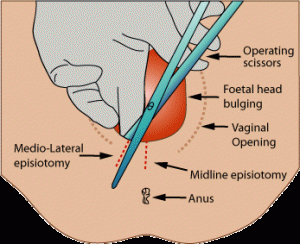
The procedure itself begins with your doctor injecting a local anesthetic, typically a perineal nerve block, to numb the area where the incision will be made. If an epidural was placed during the early stages of labor, local anesthesia is not necessary. Two fingers are placed between the scissors and the baby’s head for protection. A one-inch incision is made in the vaginal wall and surrounding tissues, taking care to avoid the anal area.
This cut enlarges the vaginal opening to assist in the delivery of your baby. If forceps or a vacuum device are to be used, the length of the incision may be longer than if such instruments are not needed. After both the baby and the placenta are delivered, the birth canal is examined for any unexpected tears. These tears and the episiotomy are then closed. Each layer of the vaginal muscle, inner mucosa, and perineal skin are closed sequentially with absorbable sutures. This procedure usually takes about 10-20 minutes, and is done while mom is boding with her baby. It is important for the incision to be closed quickly to prevent blood loss, and reduce the likelihood of infection.
A midline incision is easiest to do and repair. However, if it must be extended or a tear occurs, there is a risk of anal injury. A mediolateral episiotomy is more difficult to repair, but it provides the best protection against damage to the anal sphincter.
Why Do You Need an Episiotomy?
A normal vaginal delivery involves intense labor contractions, and requires a mother to push forcefully against the perineum. Time and patience are required for labor to progress to the delivery of a baby. This pushing, however, can cause tears within the vagina and of the perineum as the baby’s head is delivered.
An episiotomy may be performed to prevent jagged-edged tears which are likely:
- if your baby presents face first
- if you have a scar from previous childbirth tears
- if you’ve had previous surgical repair of a tear or uterine prolapse
An episiotomy may also be performed:
- if your baby must be delivered quickly due to signs of distress. For example, this may be necessary if there is lack of oxygen because of umbilical cord compression.
- if your baby is large or has a larger head size
- if your baby’s shoulder gets stuck in the birth canal
- if there is not enough room to deliver your baby with forceps
- if your baby presents bottom first (breech), and needs room for the hips to pass through the birth canal
- to prevent over-stretching of the perineal muscles which may lead to future pelvic floor prolapse
The primary reason, however, is to avoid tears. An episiotomy is a clean, surgical cut that is easier to repair than a natural tear. Such injuries include:
➪ when the skin of the perineum is injured. This is a superficial injury, and may not need to be repaired.
➪ when the lining of the vagina and some its connective tissue is torn
➪ a tear through the muscle around the anus (sphincter)
➪ a tear that extends through the vagina and into the rectum
Stretching of the skin, and small tears may not require suturing.
Advantages of an Episiotomy
Although there is perineal pain and discomfort following an episiotomy, there are advantages to having one.
- An episiotomy can make the process of delivery much easier, requiring less pushing to deliver the baby.
- Your baby can be delivered quickly in certain emergency situations.
- There is less trauma to the vaginal tissues. If the vagina or perineum are allowed to tear, it may do so in an irregular shape which is more difficult to repair than a scissors incision. You may also tear in a way that could cause more serious injury to the rectum or anus. Preventing an anal sphincter tear is very important as this could lead difficulty passing bowel movements or fecal incontinence.
- Tears typically take more time to heal than an episiotomy.
Possible Complications of an Episiotomy
An episiotomy may cause localized pain, bleeding, swelling, and bruising, or become infected. There is also a risk of complications if the incision extends into the rectum, or the episiotomy wound isn’t sewn back together well. It is important to avoid sexual intercourse for several weeks until the episiotomy has completely healed. In some cases, there may still be some discomfort even after the episiotomy incision has completely healed.
How to Care for an Episiotomy
An episiotomy heals in approximately 4—6 weeks depending on the size of the incision, material used for the stitches, and the lifestyle of the mother after delivery. Most often, dissolvable sutures are used. Once the body resorbs them, the repair is strong, and the edges should not separate. If you see stitches on your sanitary pad, check your episiotomy with a mirror to make sure the skin is still closed and looks healed.
In the delivery room, the procedure is painless because of local or epidural anesthesia. Once this anesthesia wears off, however, the recovery period can be painful. The wound or stitches may feel uncomfortable for the mother, especially while sitting. The following tips can help relieve this pain and discomfort:
- Ice packs applied to the perineum can reduce pain and swelling. It is important to reduce swelling because a swollen wound pulls the stitches, and increases discomfort. Ice packs can be used during the first 24 hours after childbirth in cycles of 20 minutes on and 10 minutes off. Ice should not be applied directly onto the skin due to the risk of “cold burns.”
- Ring cushions inflated with air, water, or made of foam can make sitting more comfortable.
- The incision site should be cleaned with warm water and plain, unscented soap after using the bathroom. The hospital may provide you with a specialized hygiene bottle for spraying water on the area.
- After the first 24 hours, sitting in a tub of warm water for 20 minutes, several times a day, can help relieve pain. After the bath, the incision site should be patted dry with a soft towel.
- Expose the stitches to the air for at least 10 minutes, two times per day.
- Witch hazel can be applied to the site to sooth the soreness of episiotomies and hemorrhoids (Tucks Pads, Tucks Clear Gel). You can make your own pads by using soft 2” x 2” non-sterile gauze, and adding witch hazel. Always apply the witch hazel to a clean gauze pad to avoid contaminating the bottle of witch hazel. To make cold witch hazel pads, keep the bottle or some pre-soaked witch hazel pads in the refrigerator. Alternatively, your doctor may recommend using a topical anesthetic (Americaine, Dermoplast).
- Over-the-counter acetaminophen may be taken to relieve the pain. This medication is safe to take while breastfeeding, and will not interfere with the healing process of the episiotomy. Other pain medications should first be discussed with a doctor to make sure they are safe and appropriate.
- Reduce the burning or stinging sensation while urinating by pouring warm water over your perineum as you go.
- Avoid straining while stooling. Doing so puts excessive pressure on the stitches during bowel movements. Moms can reduce constipation by drinking lots of water, and eating plenty of fiber. Ask your doctor about using a stool softener (Colace) to make passing stools easier. These medications will not affect breastmilk, so you may continue to breastfeed your infant. To have less pain during bowel movements, hold wad of toilet paper against the healing episiotomy. Wiping in a front to back direction prevents stool from getting on the stitches. Follow wiping by gently using witch hazel pads to reduce minor itching or burning.
- Squeeze your buttocks together when having a seat or standing to help ease the discomfort of your stitches.
- If you are unable to relieve the pain or have a temperature above 100.5° F, call your doctor immediately. These could be signs of an infection. It is very important to prevent an episiotomy infection which could spread to the vagina or uterus. Read here for hygiene information about perineal care after vaginal birth.
Once you return home, call your doctor:
- If you have fever and chills, or redness, pain, and swelling of the incision site that does not improve each day.
- If you have a foul-smelling discharge or bleeding from the episiotomy site.
- If your pain isn’t controlled with the medicines your doctor prescribes.
- If you have bowel or bladder control problems that do not resolve.
Always wash your hands thoroughly before and after using the bathroom, or changing a sanitary pad. Proper hand-washing is the best way to prevent infections. This link will tell you more about proper handwashing, when to use soap, and when it’s OK to use gel sanitizers.
Hemorrhoids
Hemorrhoids are swollen veins of the rectum. They may develop during the last trimester of pregnancy due to pressure from your baby’s head, or while pushing during the final stage of labor. It may be difficult to distinguish the pain of an episiotomy from that of hemorrhoids. Read here for more on how to care for the perineum and hemorrhoids.
Long-term Effects of Episiotomy
Because of the substantial number of blood vessels in the perineum, most episiotomies heal quickly and without complications. The sutures are absorbed by the body, and do not need to be removed. The pain and discomfort can be reduced with medications, and by using ice packs within 24 hours, followed by warm baths. Doctors encourage walking as soon as you feel able. Everyday activities may gradually be resumed shortly afterward, though the stitches might take some time to heal completely.
In some women, however, there are post-episiotomy complications. The way in which the episiotomy heals can lead to sexual dysfunction or difficulties with future vaginal deliveries. If a midline episiotomy is cut too close to the anal sphincter, problems with the passage of stool may occur. Persistent urinary incontinence is also a possible outcome.
Ways to Avoid an Episiotomy
It’s a good idea to discuss your feelings about an episiotomy with your doctor. Include your thoughts as well as those of the doctor your birth plan. However, there are times when an episiotomy is unavoidable.
There are a few strategies that may prevent the need for an episiotomy. The following methods may help you to deliver your baby without one.
Perineal Massage
Massaging the perineal and vaginal area to stretch the tissues may facilitate a childbirth without an episiotomy or tears. Perineal massage should be done one to two times per week, beginning at 35 weeks gestation. A sterile lubricant such as KY jelly should be used. Make sure your fingernails are trimmed, and that you wash your hands prior to doing the massage. It may also be done by a doula or midwife during the second stage of labor. However, talk with your doctor before starting massages, especially if you have a history of vaginal infections, or are at risk for a preterm birth.
How to do perineal massage: apply a water soluble lubricant to an index finger, then insert it into the vagina about an inch. While applying some pressure, slide this finger in a semicircular motion, starting on one side of the vagina, then down toward the anus, and back up to the other side of the vagina. Continue this motion for a 5 minutes. Afterward, wipe off the excess lubricant to prevent soiling your clothes.
When labor begins, inform your obstetrician that you have been doing perineal massage. While there is no guarantee that you won’t need an episiotomy, massage still may reduce trauma to the perineum during delivery.
Do Kegel Exercises
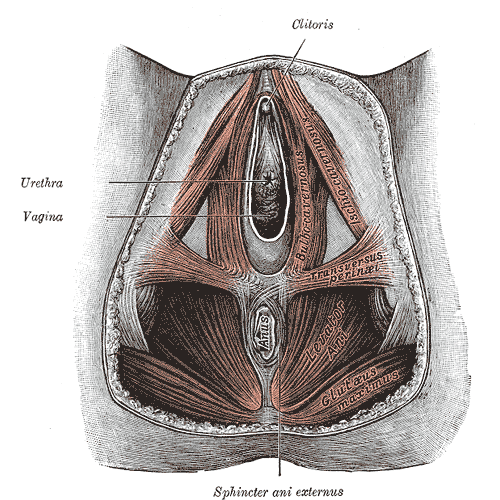
Many women do these exercises throughout their pregnancy, and should continue them them after the baby is born. The pelvic muscles are just like any other muscle; exercise makes them stronger. Kegel exercises are a sequence of tightening and relaxing the pelvic muscles. They strengthen the muscles which support the organs within the pelvis (uterus, bowel, bladder).
First, it is important to know which muscles to exercise. To find these muscles, try to start and stop urinating while using the toilet. Once you are aware of how these muscle contractions feel, you should do Kegel exercises while lying, sitting, standing, walking, and driving. This helps to strengthen the pelvic floor muscles.
Kegel Exercise: Slowly and gradually tighten the perineal muscles. Similarly, release the muscle contractions slowly, then repeat. Start by doing such contractions 5-10 times, then increase them to 20-30. Optimally, Kegel exercises should be done 3 times a day (morning, afternoon, and evening). Try to do them on a regular schedule such as after meals, in the shower, or just before bedtime.
Try not to squeeze your buttocks or abdomen while doing the contractions as this puts pressure on the pelvic floor muscles. Keep the muscles of your abdomen, thighs, and hips relaxed.
You may also want to do Kegel exercises while lifting, sneezing, coughing, or laughing. After some time, it will become a routine.
Correct Breathing and Pushing During Labor
Controlled breathing, along with proper pushing, helps to prevent an emergency vaginal delivery which would necessitate an episiotomy. Pushing only when you’re told to can give your perineum time to stretch, thus avoiding tears.